
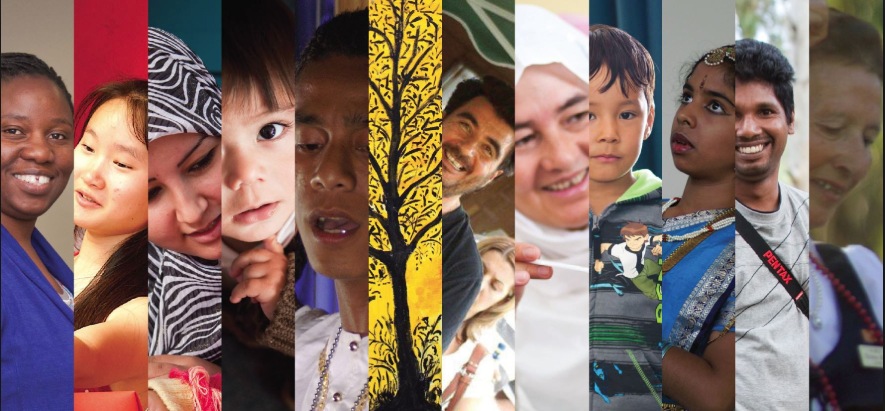
 It was interesting this week to study how diverse paradigms can shape and influence the individuals within a culture to see themselves and, in turn, the world around them. These differences can have far-reaching implications for ESL or EFL educators, as they strive to teach students whose alternative view may dictate how one is to act or react in the classroom, in what way they may interact socially within their peer group, and how these beliefs will influence parental involvement in their child’s education. For example, in many cultures around the world, a teacher is expected to educate in a Perennial fashion where students attentively listen in a lecture-based classroom and provide minimal feedback. Parents and students, within this paradigm, each have the expectation that the teacher is the fount of all knowledge and that they, the students, are meant to “absorb” the lessons being taught. This type of teacher-led instruction can be in direct contrast to those cultures who feel interaction is a necessary component to learning and may result in students being mislabeled as “shy,” “unable to communicate effectively,” or, inaccurately, as a child who requires Special Education services.
As an ESL or EFL teacher, one way to reduce these possible misconceptions is by learning more about the students prior to the beginning of class, which can be done by reading their files, asking former teachers (if possible), and by meeting the family. In addition, plan lessons that promote cultural diversity in order to learn more about how their unique paradigms shape their viewpoint and encourage a classroom environment that recognizes those differences and celebrates them. Knowing our students can be invaluable to their success and is the result of a conscious effort, on our part, to serve them better. In his talk “Unity in Diversity” Elder John K. Carmack states, “becoming one does not mean becoming the same” (Carmack, 1991) and this blending without losing individual characteristics helps us to understand that, while we are all children of God, how we view cultural paradigms can influence how we treat others and result in a beautiful multi-faceted whole.
References
Carmack, J. (1991, March). Unity in Diversity. Retrieved February 4, 2019, from https://www.lds.org/ensign/1991/03/unity-in-diversity?lang=eng
Greater Shepparton City Council. (n.d.). Our Community’s Diversity. Retrieved February 4, 2019, from http://greatershepparton.com.au/community/diversity (Image)


