2/23/2019; W08 Response: Deep Culture in the Elementary Classroom

Screen Shot 2019-02-23 at 2.09.21 PM.png

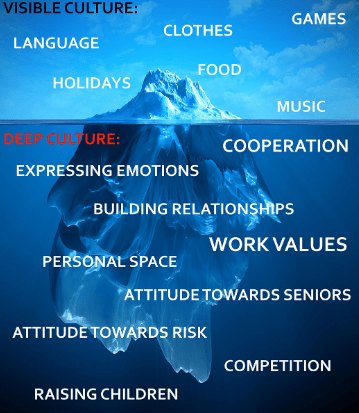
While visible culture, not unlike an iceberg, may only show the smallest portion of its impact above the water, deeper cultural perceptions, such as how one views themselves, what their life’s expectations will be, and how they will relate to those around them can be far greater than that tiny visible piece offered and effect personal interaction in both positive and potentially negative ways. As we have learned in the last few week’s lessons, cultural paradigms of manners, success, expressivity, and many others can be seen, not only differently, but sometimes in complete opposite of what one traditionally finds acceptable or pleasing and some great examples of these in the readings included how Japanese culture finds slurping their food as “good manners” and the Albanian methods for “yes” or “no” head movements as the reverse of Americans. These and many other instances demonstrate how often common, everyday items that are embedded into our belief systems are the result only of perception and not worldwide acceptance.

In the TESOL classroom, teachers often address the visible cultural diversity issues with lessons which can open discussions about differing holidays, food preferences, and feelings of nationalism, however, unless those lessons are expanded to include the deeper cultural beliefs, only superficial understanding can be reached and, while better than nothing at all, this can limit how students can truly get to really know one another and find acceptance on a more global platform. By introducing content that would contain more complex and critical thinking experiences, dialog and scenario exchanges, and information on how differing viewpoints may have come to be, students and teachers, can become more community-minded as function more effectively as a group. In my future and present classrooms, I hope to utilize many of these pieces and more to develop a learning environment of support, warmth, and understanding for all my students in order to better facilitate growth and provide them with success.

References:

“Canadian Culture.” English & Immigration, englishandimmigration.com/citizenship-immigration/canadian-culture/.

 

2/18/2019; W07 Response: Culture and Psychology

Screen Shot 2019-02-18 at 9.44.15 AM.png

One of the more pervasive elements in my home culture that I feel is irrationally causing me to have low self-esteem issues, at times, is the perception that one’s body should be forever thin, beautiful, and modeled off of the unrealistic expectations of today’s media. While I am well aware that many of these “ideals” are the conscious and deliberate acts of multi-billion dollar industries that are only after the next dollar, these effects can be seen (and felt) in even the most random areas of society and are resulting in generations of people believing that the body they are blessed with will never achieve, or maintain, perfection. As a free market society, it would be incredibly difficult to alter the pitch methods used to promote products, however, I do believe understanding the “why” behind the ad can help buyers to choose their products for what they actually do (not what the spokesperson pitches) and that individuals need to have a strong foundational base regarding the importance of diversity and acceptance for their divine uniqueness. This, in my opinion, should begin in the home,  be echoed in the school environment, and modeled by the community to ensure our children’s positive self-image.

In contrast to our more negative views, other parts of the world, such as Indonesia, Hungary, and Egypt, have much higher levels of satisfaction due to, I believe, a culture where the individual is not disposable, but cherished for who and what they are. As our society has continued to promote the idea that even the family unit is interchangeable for “better fit” options, we have eliminated the surety of each member knowing their “value” to a more competition based fear that we will never be enough…To correct these false beliefs, I feel our culture should model our more positive counterparts and return to the family as the source of strength for identification and not the advertisers skew on the American “dream.”

In a TESOL classroom, there will be many “home culture” perspectives that will have an impact on how we interact with each other, from the lessons to the books, much of the material will be from the American perspective. As many of these differences may not, at first, be readily apparent (and possibly not ever), it is likely that my home culture will result in bias from both the students and myself, which may result in hurt feelings or a longer silent period.

Some insights that I gained about other cultures and my own during the readings this week was how often we will live up to society’s perceived “expectations” instead of personal insight. This was evident from Brother Ivers example of how students performed when asked to give their race prior to assessment versus when they were not and demonstrates how pervasive stereotyping can be. In my classroom, we will focus on the individual, not the perception of the race or culture, to promote acceptance and diversity, not a classification, as defining factors and learn to “see” each over for the wonderful human beings who we truly are.

References:

Jessica. “Stop Working out Because You Hate Your Body.” SpotMeGirl.com, 29 Nov. 2018, spotmegirl.com/fitness/loveyourbody/. (Image)

2/17/2019; W07 Response: Differences in Manners

Screen Shot 2019-02-17 at 10.19.28 AM.png

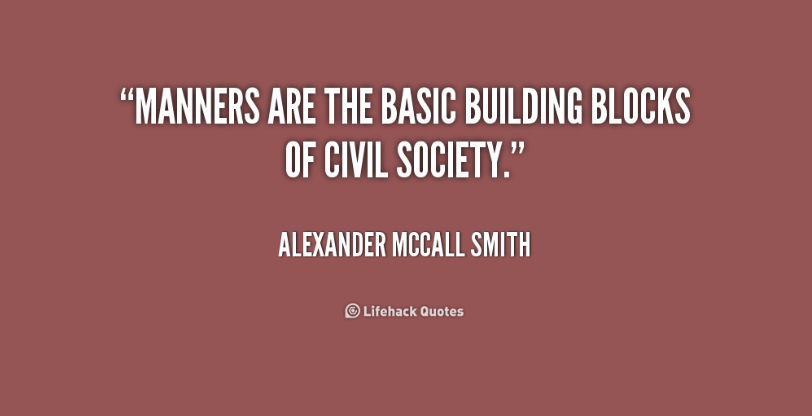
Lovely quote and one that many would agree with, however, it does beg the question as to whose “society” would the displayed manners be considered “civil” in and gets to the heart of this week’s lesson on how different cultures view “good manners.” As always, the discussion Brother Ivers has with his students was wonderful for explaining how our differing points of view could lead to severe misunderstandings and personal bias when dealing with our fellow man. One example, the all-night party, in particular, really hit home, as this has been something our neighborhood has been dealing with for a number of years. For those of us who live in Arizona, it is quite common to see the strong influence the Hispanic culture has had in many parts of the Valley and, while this can be incredibly amazing to learn about and experience, it has also led to quite a bit of contention as many of our cultural paradigms do not always align.  In this case, multiple times a year, one of our neighbors throws a celebration that includes a live band until the wee hours of the morning and, while the police are often called to deal with the noise level, this has not changed the party throwers perception that his neighbors are comfortable with his cultural norms. His “rudeness,” in the eyes of the neighborhood, should be self-evident and, as a whole, they are not overly inclined to excuse what they feel should have become a non-issue long ago. These attitudes, on both sides, accurately represent how ingrained our personal belief systems on manners can be and should be something we, as teachers, are aware of in the classroom environment.

Manners, according to the Cambridge Dictionary are “ways of behaving toward people, esp, ways that are socially correct and show respect for their comfort and their feelings,” and are often felt to be ingrained from a very young age.  In the classroom, these almost subconscious forms of behavior can result in either positive or negative student interaction and can affect how peer pressure may be applied to “correct” the situation. This has the potential to become problematic in the inclusion setting, as the consensus may be the views of the many versus the one, however, in the sheltered or 50/50 environment, there may be more opportunities for open discussion and equal understanding to be reached by both students and teachers, as having knowledge of why people exhibit certain behaviors can eliminate or reduce tension, I feel a lesson on cultural manners should be fundamental for all classrooms, including those who may not be as diverse, since this realization that not all viewpoints are similar can expand thought processes and cultivate the tolerance, respect, and love we need to see mankind as our brothers and sisters and not as separate or “other.”

References:

“Meaning of Manners in English.” Cambridge Dictionary, dictionary.cambridge.org/us/dictionary/english/manners.

“Quotes about Basic Manners Eval(ez_write_tag([[970,250],’quotemaster_org-Box-3′,’ezslot_1′]));” Quotes about Hades (62 Quotes), http://www.quotemaster.org/basic manners.   

2/16/2019 W07 Response: Cross-Cultural Students in the Classroom

Screen Shot 2019-02-16 at 3.39.27 PM.png

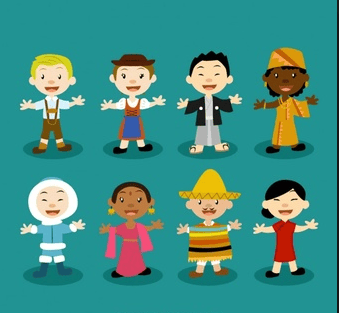
It was very interesting to read about how other cultures may view the American classroom based on their own cultural paradigms in this week’s lesson. I often found myself nodding and agreeing with Brother Ivers’ description of how our students, generally, do not give their teachers the same level of respect, as those in other parts of the world are afforded, due in part, to our country’s strong belief in equality. It was very easy to relate to his comparing and contrasting example concerning how a person with an Asian perspective would not dream of leaving the classroom during the lesson as something that is not usually viewed as an issue here. In my own high school classroom, this behavior is considered the norm and students who need to use the restroom or get a drink are well practiced in the procedure of signing out and taking a pass quietly to avoid interrupting others. This, from our perspective, is seen as respectful and not unlike, how in later situations, we will follow our American cultural expectations and excuse ourselves when we receive an important call that cannot wait, however, in other parts of the world, it is the act of leaving that would be considered inappropriate.

In the TESOL classroom, it is important to know our students to have a more complete understanding of how their own individual views will affect not only their learning but how they will interact with their peers and teacher. This knowledge can help reduce misunderstandings and encourage more social interaction within the classroom in order to facilitate language acquisition. Knowing why a student may react as they do can eliminate personal bias as well and help us, as teachers, to appreciate our students on a more global context. While there is not a one-size-fits-all way to view cultural norms, seeing the world from our students’ eyes can help us to become better teachers and disciples of Christ.


https://www.freepik.com/free-vector/multicultural-characters_766824.htm (Image)


2/12/2019; W06 Response: Attributional Tendencies

Screen Shot 2019-02-12 at 10.59.33 AM.png

As always, Brother Ivers has a way to relate the subject to examples I can understand and enables me to almost visually “see” what he is trying to convey from his colorful lessons. His lecture on “Attributional Tendencies” was no exception and it was interesting to learn how different people will view the trials and tribulations of life. As pointed out, assessing the behavioral needs of our future students will occur in any classroom, since this is a tendency that is shared by all, however, this issue can be of particular importance in the TESOL learning environment, as many of our students will have cultural inclinations we may not always be aware of.

Some misunderstandings or problems that may occur include students reacting in the exact opposite manner we would expect, which could lead to what we perceive as shutting down or the failure to take responsibility for their actions. In learning how these attributes may be viewed differently by others, I have a clearer understanding of how important it is to learn about my students in order to prevent these misinterpretations from impacting their learning environment. For example, when those who possess more Asian cultural propensities internalize criticisms, I know to gauge my words very carefully in order to keep their affective filter low. This knowledge of perceptual differences is also beneficial for my externally inclined students as “blaming” outside factors may their “default” tendency and not a desire to deflect at all.

This week I feel my home culture has been improved by learning more about the various ways a person’s culture and individual views shape their thought process and resulting behaviors. As knowledge of any kind is tremendously important and, as we know, the only thing we take with us, I can alter my own expectations to better reflect a more global context and use my understanding to reach the level of service and love my Savior desires of me. “Love one another” is one of the commandments I hold most dear and by accepting this charge, wholeheartedly, I can become the disciple I aspire to be.


References

ATTRIBUTION THEORY. (n.d.). Retrieved February 12, 2019, from https://www.referenceforbusiness.com/management/A-Bud/Attribution-Theory.html (Image)

2/11/2019; W06 Response: Personal Space Differences

Screen Shot 2019-02-11 at 1.17.52 PM.png

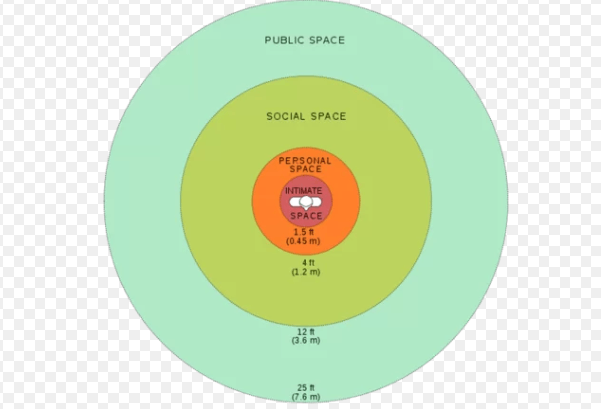
While personal space may not be something that we consciously think about on a daily basis, this personal “bubble” is something that influences many aspects of our lives. Depending on gender, cultural norms, and societal interaction, this “space” we feel most comfortable within can impact the TESOL in both positive and challenging ways, such as the opportunity to learn more about another’s perspective and misunderstandings, such as feelings of unease due to someone not following the individuals “bubble rules”. One way to address this issue could be a lesson on personal space in the first few weeks of class in order to alleviate potential conflict and provide fellow students and the teacher the ability to better “read” the body language of those around us. This could be especially beneficial for assisting students within the “silent period,” as others may be better able to gauge their comfort level and act appropriately to lower the affective filter. From where a student is seated to who they are paired with, differing perspectives may have significant unintended outcomes and I believe it is far wiser to discuss this as a class as soon as possible.

Additionally, during the readings, I found it very interesting to learn about the “leading Japanese in the waltz with Americans” since this is not a culture that I would initially feel would be comfortable within a smaller personal space. To me, this culture seems very reserved and respectful of others and, while this would not be seen as rude to them, I would certainly have thought that this shoe would be on the other “foot” in terms of Americans being more apt to be within someone’s bubble (bias anyone?). Understanding that my preconceived notions may not be accurate can help me to actually do the research necessary to limit these inaccuracies and enable me to react correctly. In the classroom setting, this can provide a greater understanding between my students and myself and limit misunderstandings.

Finally, understanding how and why we have this need for space can improve my home culture by giving me the realization that the world is far more vast than my narrow view and that there is not a “right” way when describing cultural differences. Eric B. Shumway addresses this issue at a 1978 symposium where he declares, “the principal resource of knowledge, power, love, and reverence by which peoples of different cultures and races not just understand each other but also interact and live harmoniously together, and in effect become one people” as the ultimate goal and is one I can further in myself by taking these differences into consideration but not let them define how I interact with others.

References

Shumway, E. B. (1978). Bridging Cultural Differences. Retrieved February 11, 2019, from https://www.lds.org/ensign/1979/07/bridging-cultural-differences?lang=eng

Wolchover, N. (2012, June 06). Why Do We Have Personal Space? Retrieved February 11, 2019, from https://www.livescience.com/20801-personal-space.html (Image)

2/09/2019 W06 Response: Individualism vs. Collectivism

Screen Shot 2019-02-09 at 8.26.37 PM.png

As Americans, we often pride ourselves on individualism and becoming independent as soon as possible, however, this perspective can have an unforeseen negative impact in ESL or EFL classroom as students with a group orientation background may react in ways many teachers may not be used to and result in miscommunication both within the learning and home environment. Collectivism, in contrast to Individualism, places the welfare of the many over the needs of the one and is practiced in many parts of the world including China, Japan, India, and Venezuela. This perspective encourages students to be highly motivated and on task but discourages those same students to stand apart from their peers. Traditional American acts, such as student of the month awards, calling attention to a job well done in the classroom and informing parents of how productive their child has been can have the opposite effect of the intended positive praise and widen the communication gap significantly.

To prevent these misunderstandings, educators should learn as much as possible about the culture and societal norms of all their students, as this information gathering can help in understanding the traditions, cultural paradigms, and possibly the learning style the student is familiar with. Although a teacher could not be expected to apply the multitudes of diverse teaching styles, it can be beneficial to know how a student would view a typical classroom in order to provide the most optimal learning environment. As Neil A. Maxwell states in his talk ” A Brother Offended,” “prevention is always better than rehabilitation[,as] sometimes, ironically, prevention requires no more than a few extra minutes…” and by choosing to take the time to know our student’s background, we can help lower affective filters to help them to feel included, without disregarding their beliefs.

References

Maxwell, N. A. (1982, April). “A Brother Offended”. Retrieved February 11, 2019, from https://www.lds.org/general-conference/1982/04/a-brother-offended?lang=eng

How to Sell Online to Individualist vs Collectivist Cultures. (n.d.). Retrieved February 11, 2019, from https://www.psychologytoday.com/gb/blog/webs-influence/201307/how-sell-online-individualist-vs-collectivist-cultures?amp= (Image)

2/9/2019 W06: Response to Differences in Emotional Expressivity

Screen Shot 2019-02-09 at 11.50.33 AM.png

This week, part of our lesson addressed the differences people of other cultures can have in reading and understanding the emotional expressivity of those people outside of their perceived “norms” and who better to illustrate those misunderstandings than Spock and the crew of the Enterprise (trekkie fans rejoice!)? This play on cultural differences was used throughout much of their long, long, (really long) association with each other and gave a clear picture of how often understandings or interpretations can be dependent upon how individuals feel the other “should” act and react to the situations presented. While many of us would relate to the desire of Captain Kirk or Bones to “humanize” Spock’s emotional responses (as fellow Earthers ourselves), one must also take into perspective the viewpoint of Spock himself. Why should he be expected to conform and how do you believe your future ESL or EFL students would feel if they were also under the impression that much of what they said or did was seen as “wrong” by their fellow students or teacher?

Emotional expressivity, I believe, is a wonderful example of how cultures have evolved and adapted to meet the societal needs of the vast amount of Heavenly Father’s children and allow us to learn tolerance and respect while giving each other endless opportunities to love the diversity, we all have, in its many forms. As educators, I feel it is incredibly important to give every student the chance to shine and show how they, themselves, are a part of the glorious whole. This can be done by not passing judgment on those that are different than ourselves and by providing continual chances for students to “instruct” each other on what their “norms” comprise of to promote a classroom environment of equality and acceptance. While Star Trek, in my opinion, is one of television’s best depictions of what acceptance could potentially look like, I do believe an episode where Kirk and Bones serve a mission primarily with Vulcans (as secondary players) would have been a real “eye opener”…

References

Gaigg, S. (2019, February 08). People with autism don’t lack emotions but often have difficulty identifying them. Retrieved February 9, 2019, from http://theconversation.com/people-with-autism-dont-lack-emotions-but-often-have-difficulty-identifying-them-25225 (Image)


2/5/2019 W05 Response: Cultural Miscommunication

Screen Shot 2019-02-05 at 7.00.34 AM.png

Out of the three reading topics for this week, Cultural Miscommunication is one that I feel is most often used by the media to portray the different responses many commonplace gestures and customs have in other cultures. Even though I, myself, do not watch much television, I have seen several of the commercials referenced by the video (the eel one cracks me up every time!) and have those aha! moments where the light bulb goes off and I realize the world does not always think as I do. In one of my classrooms this year, I have been fortunate enough to have three of our German foreign exchange students at the same time and it has been enlightening (on both sides) to hear of some of the small differences our cultures have, for instance, last week we were discussing the weekend and found out that while we (in America) would say “I am sleeping in,”  my German students would say, “I am sleeping out.” Such small words can change the inference and lead to puzzlement on both sides unless both are open to an honest exchange of ideas and thoughts.

Luckily, our school hosts many students from other parts of the world and almost every single one of our Language B teachers are have come from somewhere else on the planet (three of our Mandarin teachers alone are from China!), which makes for some very interesting conversations both on the teacher’s and on the student’s side of the equation. The increased understanding and tolerance these discussions bring are, in my opinion, a fine example of how there is no “true” way and demonstrate the importance of cultural diversity and acceptance in the classroom environment. As an ESL educator, I believe it is critical to find the balance between welcoming the new without disregarding the previous to lower the active filter and promote a warm relationship within the classroom and beyond. In the talk “Loving Others and Living with Differences” by Elder Dallin H. Oaks he advises, “We should love all people, be good listeners, and show concern for their sincere beliefs. Though we may disagree, we should not be disagreeable” (Oaks, 2014) and demonstrates how loving and serving, not being “right,” is the ultimate goal. Teaching should be reciprocal with learning and those who create a safe environment in which to do so will provide the best possible setting for their student’s success.

References

Oaks, D. (2014, October). Loving Others and Living with Differences. Retrieved February 5, 2019, from https://www.lds.org/general-conference/2014/10/loving-others-and-living-with-differences?lang=eng

8 Causes of Miscommunication and Misunderstanding. (n.d.). Retrieved February 5, 2019, from https://www.userlike.com/en/blog/causes-of-miscommunication (Image)


2/4/2019 W05 Response: Cultural Differences in Concerning TIME

Screen Shot 2019-02-04 at 1.10.41 PM.png

As an extremely monochronic person (always early and dependable), it was very interesting to read about the different outlooks of polychronic societies. Having not ever been farther out of the country than a day trip to Mexico and a couple of nights spent in Canada, it was a real eye-opener to read this week’s material regarding the cultural paradigms concerning how time is seen by other countries and the reasons behind those views. “Family is everything” is a phrase that is often said in America, however, as Brother Ivers stated in his classroom lesson, this is not a concept that is actually put into much practice in our society, as jobs, obligations, and responsibilities seem to be the watchword of the average citizen, regardless of what may be going on at home. In our defense, how often have we wanted to take that time off to care for a sick child, attend a class field trip, or go to that family reunion but our place of employment either penalizes or rewards those who are on the job and doing their work, as expected? Time, to us, is something we never have enough of, cannot waste for a second and is something that is always at the forefront of our day.

In contrast, polychronic societies place the needs of the individual above the clock and may even tell a falsehood to avoid hurting the feelings of another. Time, for them, is not the ultimate goal and they would likely find our hustle and bustle as confusing as we see their willingness to not live or die by its measurement.  These differing paradigms can have a significant impact on the ESL educator who may be teaching those students that are entering the workforce of a monochronic minded society. Just this year, my place of employment let go of a teacher who was chronically late for work, however, it may very well have been the case where his views were not in sync with our expectations. I believe understanding and learning from others is a significant step in the direction of avoiding these misunderstandings and this concept is reiterated in the July 2007 issue of the Liahona where it states, “sometimes our culture and the Western culture are very different,” said Seung Hwun Ko, a Church member from Seoul, Korea, “but when we talk about the gospel of Jesus Christ, we meet” and illustrates how communication can be the key to foster love of one another. As an educator, I will endeavor to always seek a way to serve without judgment and celebrate the uniqueness of all our Father’s children.


References

Church Diversity Breaks Stereotypes. (n.d.). Retrieved February 4, 2019, from https://www.lds.org/liahona/2007/07/news-of-the-church/church-diversity-breaks-stereotypes?lang=eng

Home. (n.d.). Retrieved February 4, 2019, from https://www.journeylatinamerica.co.uk/ (Image)