
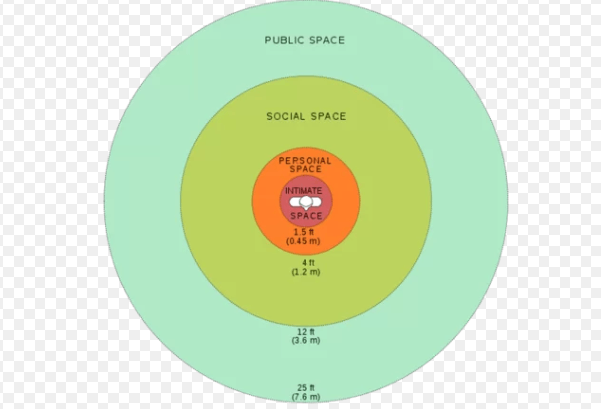
While personal space may not be something that we consciously think about on a daily basis, this personal “bubble” is something that influences many aspects of our lives. Depending on gender, cultural norms, and societal interaction, this “space” we feel most comfortable within can impact the TESOL in both positive and challenging ways, such as the opportunity to learn more about another’s perspective and misunderstandings, such as feelings of unease due to someone not following the individuals “bubble rules”. One way to address this issue could be a lesson on personal space in the first few weeks of class in order to alleviate potential conflict and provide fellow students and the teacher the ability to better “read” the body language of those around us. This could be especially beneficial for assisting students within the “silent period,” as others may be better able to gauge their comfort level and act appropriately to lower the affective filter. From where a student is seated to who they are paired with, differing perspectives may have significant unintended outcomes and I believe it is far wiser to discuss this as a class as soon as possible.
Additionally, during the readings, I found it very interesting to learn about the “leading Japanese in the waltz with Americans” since this is not a culture that I would initially feel would be comfortable within a smaller personal space. To me, this culture seems very reserved and respectful of others and, while this would not be seen as rude to them, I would certainly have thought that this shoe would be on the other “foot” in terms of Americans being more apt to be within someone’s bubble (bias anyone?). Understanding that my preconceived notions may not be accurate can help me to actually do the research necessary to limit these inaccuracies and enable me to react correctly. In the classroom setting, this can provide a greater understanding between my students and myself and limit misunderstandings.
Finally, understanding how and why we have this need for space can improve my home culture by giving me the realization that the world is far more vast than my narrow view and that there is not a “right” way when describing cultural differences. Eric B. Shumway addresses this issue at a 1978 symposium where he declares, “the principal resource of knowledge, power, love, and reverence by which peoples of different cultures and races not just understand each other but also interact and live harmoniously together, and in effect become one people” as the ultimate goal and is one I can further in myself by taking these differences into consideration but not let them define how I interact with others.
References
Shumway, E. B. (1978). Bridging Cultural Differences. Retrieved February 11, 2019, from https://www.lds.org/ensign/1979/07/bridging-cultural-differences?lang=eng
Wolchover, N. (2012, June 06). Why Do We Have Personal Space? Retrieved February 11, 2019, from https://www.livescience.com/20801-personal-space.html (Image)

